

Do Prostate Supplements Really Shrink an Enlarged Prostate?
No, over-the-counter prostate supplements do not reliably shrink an enlarged prostate in human clinical trials. While a few plant extracts—such as beta-sitosterol and pygeum—may modestly ease urinary flow or reduce nighttime bathroom trips, large studies show that popular pills like saw palmetto perform no better than a placebo at reducing prostate size.
If you are waking up three times a night to pee, dealing with a weak stream, or feeling like your bladder never quite empties, seeing ads promising to “shrink your prostate naturally” is tempting. You want relief without prescription side effects.
Let’s look at what the science actually says. We will separate physical gland shrinkage from symptom relief, break down the top ingredients, and give you a clear plan for your next steps.
Educational Disclosure & Medical Note: This is an educational article with no product promotion or affiliate links. It provides general health information, not medical advice. Because urinary symptoms can overlap with serious conditions—and supplements can interact with prescriptions—talk with your doctor or pharmacist before starting any new supplement. Never stop a prescribed medication on your own.
Why This Matters: Size vs. Symptoms
Benign prostatic hyperplasia (BPH) is a non-cancerous enlargement of the prostate gland that becomes very common as men age. According to the American Urological Association (AUA), lower urinary tract symptoms from BPH affect roughly two out of every three men age 50 and older.
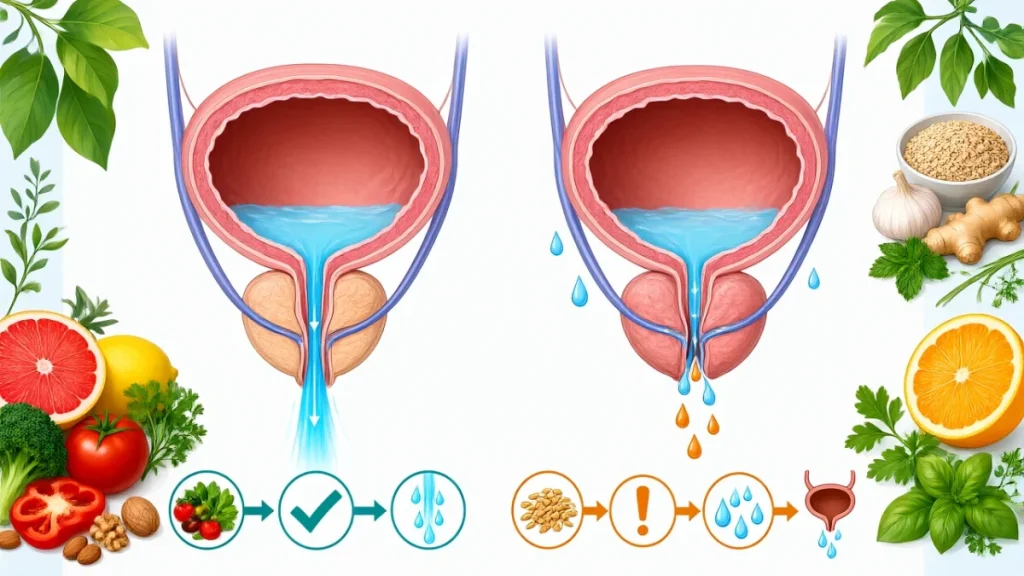
Think of your urethra (the tube carrying urine out of your body) as a garden hose, and your prostate as a donut wrapped around it. As the prostate grows, it squeezes the hose.
To fix the flow, you have two choices:
- Shrink the donut (reduce physical gland volume).
- Relax the squeeze (loosen smooth muscle tension around the bladder neck and prostate).
Most supplement ads imply their pills do the first job. In reality, even the few natural compounds that help in studies only help with the second—or calm mild tissue swelling—without shrinking the gland itself.
How I Researched This Guide
To give you an accurate answer, I reviewed clinical guidelines and systematic evidence published through 2026. Specifically, I cross-checked:
- Cochrane Database systematic reviews on herbal BPH therapies (including the 2023 Cochrane review of 27 trials covering 4,656 men).
- Summaries from the National Center for Complementary and Integrative Health (NCCIH) and Harvard Health Publishing.
- The May 2026 American Urological Association (AUA) clinical guideline update on BPH and lower urinary tract symptoms.
- Individual randomized controlled trials indexed on PubMed for beta-sitosterol, pygeum, pumpkin seed oil, rye grass pollen, and stinging nettle.
What You Will Learn
- Why prostate tissue grows and why supplements struggle to reverse it.
- An honest, ingredient-by-ingredient breakdown of what works, what is mixed, and what fails.
- How supplements compare to prescription BPH drugs on shrinkage, speed, and side effects.
- A 7-point checklist to spot misleading supplement labels and avoid hidden drug interactions.
- Simple daily habits backed by urology guidelines and warning signs that require a doctor.
Why Does the Prostate Grow—and Why Don’t Supplements Shrink It?
The prostate grows largely because an enzyme called 5-alpha reductase converts testosterone into a more potent hormone, dihydrotestosterone (DHT), which stimulates prostate cell growth. Prescription drugs called 5-alpha reductase inhibitors block this enzyme strongly enough to shrink the gland by 20% to 25% over six to twelve months, whereas herbal extracts show weak or inconsistent enzyme blocking in the human body.
In test tubes (petri dishes), extracts like saw palmetto or pumpkin seed oil sometimes appear to slow DHT activity or calm inflammation. Marketing teams love quoting those lab results.
However, what happens in a petri dish rarely matches what happens after you swallow a capsule. Digestion, liver metabolism, and varying plant extract strengths mean very little active compound reaches prostate tissue in consistent amounts.
Ingredient-by-Ingredient Evidence: What Really Helps?
Clinical evidence varies dramatically by ingredient: saw palmetto shows little to no benefit over placebo, while concentrated beta-sitosterol offers the most consistent symptom relief—though still without shrinking the prostate.
Let’s look at the six most common ingredients found on store shelves and what human studies actually found.
1. Saw Palmetto (Serenoa repens)
- The Claim: Shrinks the prostate and stops nighttime urination.
- The Evidence (Strong evidence of no benefit): Saw palmetto is the most heavily studied prostate herb, and the verdict is clear. A 2023 Cochrane systematic review analyzing 27 randomized controlled trials (4,656 men total) concluded with high certainty that saw palmetto alone provides little to no improvement in urinary symptoms or quality of life compared to a sugar pill (placebo).
- The Caveat: Some defenders argue studies used doses that were too low. Yet the NIH-funded CAMUS trial (published in JAMA, 2011) tested 369 men over 72 weeks, escalating the dose up to three times the standard 320 mg daily amount—and still found zero benefit over placebo.
2. Beta-Sitosterol
- The Claim: Improves urine flow and bladder emptying.
- The Evidence (Moderate/Mixed for symptoms; No shrinkage): Beta-sitosterol is a phytosterol (a natural plant fat found in fruits, nuts, and seeds). In a landmark 1995 double-blind randomized trial published in The Lancet (200 men), taking beta-sitosterol significantly improved urinary symptom scores and peak urine flow compared to placebo. Follow-up reviews confirm it helps men empty their bladders more completely.
- The Caveat: Researchers explicitly noted no reduction in prostate volume. Furthermore, most trials lasted under six months, so long-term safety and durability remain uncertain.
3. Pygeum (Prunus africana)
- The Claim: Reduces nighttime bathroom trips (nocturia) and strengthens urine stream.
- The Evidence (Low/Older evidence): Derived from the bark of the African plum tree, pygeum was evaluated in a Cochrane review of 18 randomized trials involving 1,562 men. Men taking pygeum were more likely to report overall symptom improvement, with nighttime urination dropping by 19% and peak urine flow rising by 23%.
- The Caveat: Most studies were short (averaging 64 days), used non-standardized extracts, and did not measure long-term prostate shrinkage. Additionally, wild Prunus africana trees face sustainability and overharvesting concerns.
4. Rye Grass Pollen Extract (Cernilton)
- The Claim: Eases urinary frequency, urgency, and prostate inflammation.
- The Evidence (Low/Mixed): A systematic review of trials on Cernilton (a standardized Swedish rye grass pollen extract) found modest improvements in self-reported urinary symptoms and nighttime waking.
- The Caveat: Reviewers noted that Cernilton did not improve urinary flow rates, residual urine volume, or prostate size compared to placebo. Studies were small and short-term.
5. Pumpkin Seed Oil (Cucurbita pepo)
- The Claim: Supports bladder function and slows prostate growth.
- The Evidence (Weak/Preliminary): While rat studies suggest pumpkin seed oil may block hormone-induced prostate growth, human data is limited. A 2009 randomized trial of 47 Korean men over 12 months reported improved symptom scores with pumpkin seed oil and saw palmetto, but changes in prostate volume were not statistically significant. A 2021 single-blind trial compared pumpkin seed oil to tamsulosin, showing modest symptom relief but lower effectiveness than the prescription drug.
6. Stinging Nettle Root (Urtica dioica)
- The Claim: Relieves weak stream and incomplete emptying.
- The Evidence (Weak/Mixed): A 2013 randomized double-blind study of 100 men in Iran reported improved symptom scores after eight weeks of stinging nettle. However, a larger 12-month multicenter German trial found only small symptom differences and noted that strong increases in urine flow or reductions in residual urine should not be expected.
Evidence Comparison Table: Common Prostate Supplement Ingredients
| Ingredient:Ingredient | Tested Daily Dose:Tested Daily Dose | Eases Urinary Symptoms?:Eases Urinary Symptoms? | Shrinks Prostate Size?:Shrinks Prostate Size? | Overall Evidence Rating:Overall Evidence Rating | Key Source:Key Source |
| Ingredient:Saw Palmetto | Tested Daily Dose:320 mg (up to 960 mg) | Eases Urinary Symptoms?:Little to no difference vs. placebo | Shrinks Prostate Size?:No | Overall Evidence Rating:Strong evidence of no effect | Key Source:Cochrane Review (2023) |
| Ingredient:Beta-Sitosterol | Tested Daily Dose:60–130 mg | Eases Urinary Symptoms?:Yes (improves flow & emptying) | Shrinks Prostate Size?:No | Overall Evidence Rating:Moderate (short-term trials) | Key Source:Lancet RCT (1995); Cochrane |
| Ingredient:Pygeum Bark | Tested Daily Dose:100–200 mg | Eases Urinary Symptoms?:Modest improvement in flow/nocturia | Shrinks Prostate Size?:No | Overall Evidence Rating:Low (older, short trials) | Key Source:Cochrane Review (2000/2002) |
| Ingredient:Rye Grass Pollen | Tested Daily Dose:126–378 mg | Eases Urinary Symptoms?:Modest self-reported relief | Shrinks Prostate Size?:No | Overall Evidence Rating:Low (mixed flow results) | Key Source:Systematic Review (PubMed) |
| Ingredient:Pumpkin Seed Oil | Tested Daily Dose:320–1,000 mg | Eases Urinary Symptoms?:Possible mild relief | Shrinks Prostate Size?:No (not significant in humans) | Overall Evidence Rating:Weak / Preliminary | Key Source:Nutr Res Pract (2009); BMC Urol (2021) |
| Ingredient:Stinging Nettle Root | Tested Daily Dose:300–600 mg | Eases Urinary Symptoms?:Mixed / minor relief | Shrinks Prostate Size?:No | Overall Evidence Rating:Weak / Mixed | Key Source:Urologe A (2004); IRCMJ (2013) |
Supplements vs. Prescription BPH Medications
Prescription medications remain the only non-surgical options proven to physically shrink an enlarged prostate or reliably prevent urinary retention.
Understanding how doctors treat BPH helps put supplement claims into perspective. According to the 2026 AUA BPH Guidelines, standard medical options fall into distinct categories:
- Alpha-Blockers (e.g., tamsulosin, alfuzosin): These do not shrink the prostate, but they relax smooth muscles in the prostate and bladder neck within days to a few weeks. Side effects can include dizziness or retrograde ejaculation (dry orgasm).
- 5-Alpha Reductase Inhibitors (e.g., finasteride, dutasteride): Recommended when the prostate measures 30 mL or larger on ultrasound. These actually shrink prostate volume by blocking DHT, though they take 6 to 12 months for full effect and can lower libido or erectile function in a small percentage of men.
- Daily PDE5 Inhibitors (e.g., tadalafil 5 mg): FDA-approved to ease BPH urinary symptoms without causing sexual side effects.
My Honest Read: If your symptoms are mild and mostly annoying, trying a well-made beta-sitosterol supplement after talking to your doctor is reasonable. Just go in with realistic expectations: you are aiming for slightly better urine flow, not physical gland shrinkage. If your prostate is genuinely large or causing bladder strain, supplements will not replace medical care.

Do Prostate Supplements Affect PSA Test Results?
Most herbal prostate supplements do not significantly change Prostate-Specific Antigen (PSA) blood test levels, unlike prescription drugs such as finasteride. However, certain vitamins—especially high-dose biotin—can interfere with lab assays and cause false readings.
Prostate-Specific Antigen (PSA) is a protein made by prostate cells that doctors measure to screen for prostate cancer and monitor prostate health. Prescription 5-alpha reductase inhibitors cut PSA numbers roughly in half, which doctors adjust for when reading your lab results.
In both the STEP and CAMUS clinical trials, saw palmetto did not alter PSA scores compared to placebo. The real risk isn't that an herb hides a high PSA—it's that relying on supplements for months might delay a proper medical exam while an underlying issue goes unchecked. Also, if you take hair, skin, or multivitamin pills containing biotin (vitamin B7), tell your doctor, as biotin can distort PSA lab tests.
7-Point Checklist: How to Evaluate a Prostate Supplement Safely
Because the U.S. Food and Drug Administration (FDA) does not test dietary supplements for effectiveness or purity before they hit store shelves, quality varies wildly. Use this checklist before buying any bottle:
- 1. Skip "Proprietary Blends": If a label lumps six herbs into one total milligram weight without listing exact amounts per ingredient, put it back. You have no way to know if you are getting a clinically studied dose (such as 60–130 mg of beta-sitosterol).
- 2. Look for Third-Party Testing Seals: Choose brands verified by independent labs like USP, NSF International, or ConsumerLab. These seals confirm what is on the label is actually inside the capsule.
- 3. Watch Out for Mega-Dose Zinc: Many "men's prostate complexes" pack 30 mg to 50 mg of zinc per serving. Taking more than the 40 mg daily upper limit long-term can trigger copper deficiency, nerve problems, and lower immunity.
- 4. Ignore "Miracle Shrinkage" Claims: By law, supplements cannot claim to treat, cure, or prevent BPH. Aggressive promises are a red flag for poor-quality marketing.
- 5. Check for Medication Interactions: Herbs can interact with blood thinners (warfarin), blood pressure drugs, or prescription alpha-blockers like tamsulosin, potentially causing dizziness or drops in blood pressure.
- 6. Set a 6-to-8-Week Trial Limit: If an ingredient like beta-sitosterol or pygeum is going to help your flow, studies show changes usually appear within 4 to 8 weeks. Don't keep paying for a bottle for a year if nothing improves.
- 7. Track Your Score Objectively: Use the free International Prostate Symptom Score (IPSS) questionnaire (a 7-question, 0-to-35 scale) before starting and again at 6 weeks so you know if symptoms truly changed.
Next Step — Check Your Current Label: Already have a bottle in your cabinet? Grab it and compare its Supplement Facts panel against the doses in the table above. If it hides behind proprietary blends or relies solely on saw palmetto, bring the bottle to your next pharmacy visit or doctor checkup to review better options.
Who Should Be Careful?
Even "natural" plant extracts aren't safe for everyone. Be extra cautious and consult your doctor first if you:
- Take prescription BPH drugs (like tamsulosin, alfuzosin, or finasteride), as combining them with herbs has not been well-studied.
- Use blood thinners or antiplatelet drugs (such as warfarin, clopidogrel, or daily aspirin), due to isolated reports of bleeding or INR changes with saw palmetto.
- Have upcoming surgery, since certain herbs may affect bleeding risk or blood pressure under anesthesia.
- Have severe or worsening urinary symptoms, where delaying proven medical treatment can risk permanent bladder muscle damage or kidney strain.
Myths vs. Evidence: Quick Reality Check
| Common Myth:Common Myth | What Scientific Evidence Actually Shows:What Scientific Evidence Actually Shows |
| Common Myth:"Saw palmetto is nature's finasteride." | What Scientific Evidence Actually Shows:False. High-quality trials show saw palmetto neither blocks DHT meaningfully in humans nor shrinks prostate tissue. |
| Common Myth:"Higher doses of herbs work better." | What Scientific Evidence Actually Shows:False. Tripling the standard dose of saw palmetto in a 72-week randomized trial still performed no better than placebo. |
| Common Myth:"A bigger prostate always means worse symptoms." | What Scientific Evidence Actually Shows:False. Some men with very large prostates have mild symptoms, while men with mildly enlarged glands can have severe blockage depending on where the tissue presses. |
| Common Myth:"Supplements prevent prostate cancer." | What Scientific Evidence Actually Shows:False. Major clinical trials (including the SELECT trial on selenium and vitamin E) found no cancer prevention benefit—and excess vitamin E actually increased risk. |
Evidence-Backed Lifestyle Habits That Actually Help
Before spending $40 a month on capsules, the 2026 AUA guidelines recommend targeted behavioral changes as first-line care for mild BPH symptoms:
- Time your fluids: Cut off liquids 2 to 3 hours before bedtime to reduce nighttime bathroom wake-ups.
- Limit bladder irritants: Caffeine and alcohol act as mild diuretics and irritate the bladder lining, worsening urgency and frequency.
- Practice "double voiding": After you finish urinating, wait 20 to 30 seconds, relax, and try gently again to empty remaining urine.
- Review your current medications: Over-the-counter decongestants (like pseudoephedrine) and older antihistamines (like diphenhydramine) tighten the bladder neck and can suddenly worsen BPH blockage.
When to See a Doctor Immediately
Supplements should never delay a medical evaluation. Schedule a visit with your primary care doctor or a urologist if your symptoms bother you—and seek prompt medical care if you notice any of these warning signs:
- Inability to urinate at all (acute urinary retention—this is a medical emergency).
- Visible blood in your urine (hematuria).
- Pain or burning when you urinate, accompanied by fever or chills (signs of infection).
- Pain in your lower back, flank, or groin.
- Frequent urinary tract infections.
Questions to Ask Your Doctor or Pharmacist
Bring these four questions to your next appointment:
- "Could any of my current prescriptions or over-the-counter allergy/cold meds be making my urinary flow worse?"
- "Based on my symptom score and exam, am I a candidate for watchful waiting and lifestyle tweaks, or do I need medication?"
- "If I want to try a standardized beta-sitosterol supplement for 6 weeks, is it safe alongside my current medications?"
- "Do we need a baseline PSA test or ultrasound before I try anything on my own?"
Key Takeaways
- No Physical Shrinkage: Over-the-counter prostate supplements have not been proven to shrink an enlarged prostate gland in human clinical trials.
- Saw Palmetto Falls Short: High-certainty Cochrane evidence (2023) shows saw palmetto works no better than a placebo for urinary symptoms.
- Modest Symptom Relief Exists: Beta-sitosterol and pygeum show modest improvements in urine flow and nighttime trips in short-term studies, though neither reduces gland size.
- Lifestyle & Medical Care Lead: Evening fluid limits, cutting caffeine/alcohol, and proven medications (like alpha-blockers or 5-alpha reductase inhibitors) remain far more reliable.
- Safety First: Avoid proprietary blends, watch zinc limits, and always get red-flag symptoms checked by a doctor.
What Next? If you aren't sure where to start, track your symptoms for one week using the IPSS scale and take the 7-point checklist above to your doctor or pharmacist. They can help you rule out underlying issues and decide whether a targeted lifestyle plan, a vetted supplement trial, or prescription therapy fits your goals best.

Frequently Asked Questions
1. Do prostate supplements actually shrink an enlarged prostate?
No, prostate supplements do not shrink an enlarged prostate in human clinical studies. While ingredients like beta-sitosterol may relax urinary tension or improve flow rates, only prescription 5-alpha reductase inhibitors (like finasteride) or medical procedures are proven to reduce prostate tissue volume.
2. What is the single best supplement for an enlarged prostate?
Among researched ingredients, beta-sitosterol (at 60–130 mg daily) has the most consistent human trial data for improving urine flow and bladder emptying. Even so, studies are relatively short-term, and it relieves urinary symptoms rather than shrinking the prostate gland.
3. Does saw palmetto work for an enlarged prostate?
No, major scientific reviews conclude saw palmetto probably does not help. A 2023 Cochrane review of 27 studies (4,656 men) found saw palmetto provided little to no benefit over a placebo, even when tested at triple the standard dose.
4. Can I take prostate supplements with tamsulosin (Flomax)?
You should not combine prostate supplements with tamsulosin without your doctor's approval. Very little research has tested the safety of mixing herbal extracts with prescription alpha-blockers, and combining them could increase side effects like dizziness or low blood pressure.
5. How long does it take for prostate supplements to work?
If a supplement like beta-sitosterol or pygeum is going to ease your urinary symptoms, clinical trials suggest you will typically notice changes within 4 to 8 weeks. If you see zero improvement after two months, continuing the product is unlikely to help.
6. Do prostate supplements lower PSA levels?
No, clinical trials show that common BPH herbs like saw palmetto do not significantly alter PSA blood test results. However, high-dose biotin (often found in hair and nail vitamins) can interfere with lab tests, so always list every supplement you take before blood work.