
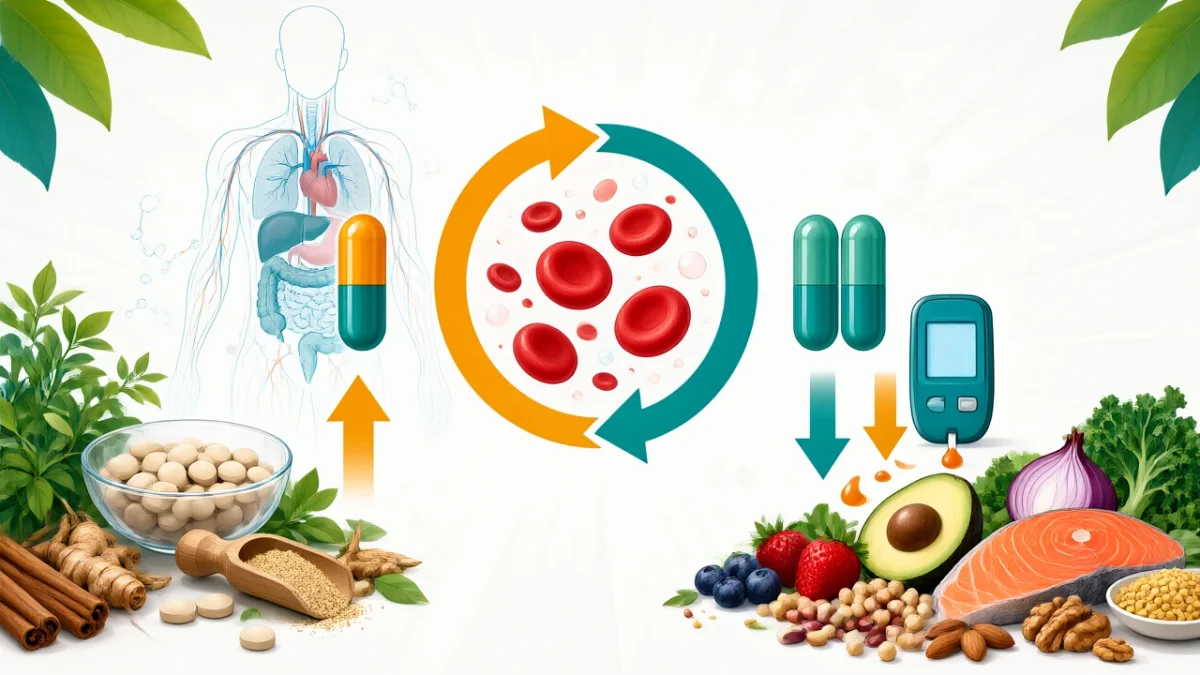
Can Blood Sugar Supplements Interact with Metformin or Insulin?
Yes—blood sugar supplements can interact with both metformin and insulin, though the risks look very different depending on which medication you take. When paired with insulin (or insulin-releasing pills like glipizide), glucose-lowering herbs such as berberine, bitter melon, fenugreek, and alpha-lipoic acid can push blood sugar dangerously low (hypoglycemia). When paired with metformin, serious low blood sugar is less common, but stacking supplements often triggers severe digestive side effects, alters how well your body absorbs metformin, or interferes with other prescriptions like statins and blood thinners.
Disclaimer: This is an educational article with no product promotion or affiliate links. It provides general health information, not medical advice. If you live with diabetes, take prescription medications, or are pregnant or breastfeeding, talk with your doctor or pharmacist before starting or stopping any dietary supplement.
Why People Mix Supplements and Diabetes Medications
If you take metformin or insulin every day, you already know how frustrating stubborn morning readings or post-meal spikes can feel. It is completely understandable to look at a bottle labeled “Glucose Support” at the pharmacy and wonder if it could give your routine an extra nudge.
Think of blood sugar regulation like steering a car down a narrow lane. Metformin acts like a gentle speed governor that keeps your liver from releasing too much extra sugar, while insulin acts like a direct foot on the brake pedal. Adding an active herbal supplement is like having a passenger reach over and press the brake at the same time—without telling you how hard they are pressing.
How I Researched This Guide: On November 22, 2026, I reviewed clinical guidance from the National Center for Complementary and Integrative Health (NCCIH), the National Institutes of Health (NIH), and the Mayo Clinic, alongside peer-reviewed pharmacokinetic and clinical reviews indexed on PubMed (spanning 2015 through 2026). Where evidence comes only from animal or laboratory models rather than human trials, I note that clearly below.
What You Will Learn:
- The two main ways supplements clash with diabetes medications (additive drops vs. absorption changes).
- Why insulin and metformin carry very different interaction profiles.
- An evidence breakdown of 8 popular blood sugar ingredients—including one that actually raises blood sugar.
- How supplements affect non-diabetes drugs you might also take (like statins and blood pressure pills).
- A practical checklist and question list for your next pharmacy visit.
How Do Supplement–Drug Interactions Actually Happen?
Supplement–drug interactions happen in two ways: either the supplement and medication push your blood sugar in the same direction at the same time, or the supplement changes how your gut, liver, or kidneys process the medication. Pharmacists call these pharmacodynamic and pharmacokinetic interactions, and knowing the difference helps you spot trouble early.
1. Additive Effects (Stacking the Same Action)
A pharmacodynamic interaction occurs when two substances produce the same biological effect. If you inject a measured dose of mealtime insulin calculated for 45 grams of carbohydrates, and you also take a high-dose bitter melon or fenugreek capsule that stimulates extra insulin release or mimics insulin, your blood sugar can drop faster than expected.
2. Absorption and Clearance Interference
A pharmacokinetic interaction happens when an herb changes how much of your prescription drug enters your bloodstream or how fast your body clears it out.
- Gut absorption: Soluble fibers (like fenugreek or psyllium) and certain plant extracts can slow down or trap oral pills in the digestive tract, blunting the dose you actually absorb.
- Cell transporters and liver enzymes: Drugs rely on microscopic cellular doorways—such as organic cation transporters (OCT1 and MATE1) for metformin and cytochrome P450 (CYP450) enzymes in the liver for many other medications—to enter cells and exit the body. Several popular herbs block or speed up those pathways.
Metformin vs. Insulin: Why the Interaction Risks Differ
Mixing supplements with insulin carries an immediate risk of dangerous low blood sugar, whereas mixing supplements with metformin more often causes digestive overload or unpredictable drug absorption. Understanding your specific medication class tells you what symptoms to watch for.
| Medication Type:Medication Type | How It Works:How It Works | Primary Supplement Risk:Primary Supplement Risk | Key Warning Signs:Key Warning Signs |
| Medication Type:Metformin (Biguanide) | How It Works:Lowers liver glucose production and improves insulin sensitivity | Primary Supplement Risk:Compounded GI upset (diarrhea, nausea, cramping); altered gut absorption or kidney/liver transport | Key Warning Signs:Persistent diarrhea, stomach pain, unusual fatigue, or unexplained high readings |
| Medication Type:Insulin (Rapid, Short, Intermediate, Long-Acting) | How It Works:Moves glucose directly from blood into muscle and fat cells | Primary Supplement Risk:Acute hypoglycemia (blood sugar below 70 mg/dL) from unmeasured additive glucose lowering | Key Warning Signs:Shakiness, cold sweat, fast heartbeat, dizziness, confusion, irritability |
| Medication Type:Sulfonylureas (Glipizide, Glyburide, Glimepiride) | How It Works:Forces the pancreas to release more insulin | Primary Supplement Risk:High hypoglycemia risk plus liver enzyme (CYP2C9) competition | Key Warning Signs:Sudden sweating, hunger, blurred vision, blood sugar dropping under 70 mg/dL |
| Medication Type:SGLT2 Inhibitors & GLP-1 Agonists (Jardiance, Ozempic, Victoza) | How It Works:Flush glucose via urine or slow digestion/boost insulin | Primary Supplement Risk:Dehydration (when herbs worsen GI fluid loss) or delayed stomach absorption of oral supplements | Key Warning Signs:Lightheadedness when standing, nausea, severe constipation or diarrhea |
Note on sulfonylureas: Even if your primary question is about metformin, many people take a combination pill (such as metformin plus glipizide). Any medication that forces insulin release shares insulin's acute low-blood-sugar risk when mixed with glucose-lowering herbs.
8 Common Blood Sugar Ingredients and How They Interact
Clinical evidence on herb–drug interactions is uneven—some combinations have human case reports and small trials, while others rely heavily on animal pharmacokinetic studies. Because dietary supplements in the United States are regulated as foods rather than drugs before reaching shelves, capsule potency can also vary wildly from batch to batch.
1. Berberine
- What it is: A yellow alkaloid extracted from plants like goldenseal, barberry, and Oregon grape.
- How it interacts: Berberine activates AMPK (an enzyme that acts like a cellular fuel gauge)—the exact same pathway metformin targets. Laboratory and animal studies published in Archives of Pharmacal Research (2015) and the European Journal of Pharmaceutical Sciences (2019) show that berberine and metformin also compete for the same cellular transporters (OCT1, OCT2, and MATE1), increasing metformin blood concentration in animal models.
- Human evidence & practical risk: Clinical reviews (including a 2023 review in Biology and clinical summaries updated in 2026) note that taking both together frequently worsens gastrointestinal side effects—diarrhea, bloating, gas, and cramping. Berberine also inhibits CYP3A4 and CYP2D6 liver enzymes, which can alter levels of statins, blood thinners, and antidepressants.
2. Cinnamon (Cinnamomum cassia and Cinnamomum verum)
- What it is: Common culinary spice sold in concentrated capsule extracts.
- How it interacts: A 2023 meta-analysis in Diabetology and Metabolic Syndrome found modest reductions in fasting blood glucose when cinnamon was added to standard care. While mild on its own, a 2021 pharmacological review noted potential additive glucose-lowering effects alongside metformin or sulfonylureas.
- Extra caveat: Common Cassia cinnamon contains coumarin, a natural compound that can stress the liver in high daily supplement doses—an important concern if you take cholesterol medications processed by the liver.
3. Bitter Melon (Momordica charantia)
- What it is: A tropical vine fruit used in traditional Asian and Caribbean cooking and concentrated into capsules or juices.
- How it interacts: Bitter melon contains compounds (such as charantin and polypeptide-p) that mimic insulin. A 2017 review of herb–antidiabetic drug interactions indexed in PubMed Central (PMC) highlighted clinical observations where bitter melon juice combined with half-doses of metformin or glibenclamide produced significant drops in serum glucose.
- Practical risk: If you take full-dose insulin or sulfonylureas, adding concentrated bitter melon introduces an unpredictable extra dose of insulin-like activity.
4. Gymnema Sylvestre
- What it is: A woody climbing shrub used in Ayurvedic medicine, often nicknamed "sugar destroyer".
- How it interacts: Gymnema can slow intestinal sugar absorption and stimulate pancreatic insulin release. However, animal pharmacokinetic studies summarized in a 2017 PMC review found that oral Gymnema sylvestre taken alongside metformin reduced metformin's bioavailability (the fraction of the drug that actually reaches your bloodstream).
- Practical risk: You get a double bind—potential blunting of your metformin dose alongside unpredictable post-meal insulin stimulation.
5. Alpha-Lipoic Acid (ALA)
- What it is: An antioxidant made naturally in small amounts by your cells and sold in 300–600 mg capsules, often marketed for diabetic nerve discomfort.
- How it interacts: According to the Mayo Clinic (2024) and NCCIH (2022), small human studies suggest ALA may lower blood sugar levels, meaning it can have an additive effect with insulin or oral diabetes pills.
- Extra caveats: WebMD and Mayo Clinic clinical monographs warn that ALA can interfere with thyroid hormone medications (such as levothyroxine) and can trigger serious neurological side effects if you have low vitamin B1 (thiamine) levels.
6. Fenugreek (Trigonella foenum-graecum)
- What it is: An aromatic seed rich in soluble fiber and an amino acid called 4-hydroxyisoleucine.
- How it interacts: A 2023 review in the International Journal of Molecular Sciences reported that fenugreek lowers fasting blood glucose and HbA1c by slowing carbohydrate digestion and stimulating insulin secretion.
- Practical risk: High amounts of soluble fiber taken at the exact same minute as oral medications can delay or reduce how well your gut absorbs those pills, while its insulin-stimulating action adds hypoglycemia risk if you use insulin.
7. Chromium Picolinate
- What it is: An essential trace mineral sold to support insulin signaling.
- How it interacts: NCCIH notes that evidence for chromium lowering blood sugar in people with diabetes is weak and inconsistent. When combined with insulin or sulfonylureas, additive low blood sugar is occasionally reported, and isolated case reports link high doses to kidney or liver strain.
8. Niacin (Vitamin B3) — The Opposite Interaction
- What it is: A B vitamin sometimes taken in high doses (500 mg to 2,000 mg) for cholesterol support.
- How it interacts: Unlike herbs that lower blood sugar, high-dose niacin increases insulin resistance and raises blood glucose. Clinical pharmacology reviews note that niacin can directly antagonize metformin, insulin, and SGLT2 inhibitors, making your prescription look like it stopped working.
Summary Table: Supplement Interaction Evidence & Risk Level
| Supplement:Supplement | Primary Action:Primary Action | Interaction with Metformin / Insulin:Interaction with Metformin / Insulin | Evidence Strength:Evidence Strength | Risk Level:Risk Level |
| Supplement:Berberine | Primary Action:Activates AMPK; slows liver glucose output | Interaction with Metformin / Insulin:Additive GI upset; alters OCT1/MATE1 transport in animals; affects statins/CYP3A4 | Evidence Strength:Moderate (human glycemic trials; animal PK data) | Risk Level:High (multi-drug interactions) |
| Supplement:Bitter Melon | Primary Action:Mimics insulin; increases tissue glucose uptake | Interaction with Metformin / Insulin:Additive blood sugar drop with metformin, insulin, and sulfonylureas | Evidence Strength:Low-to-Moderate (small clinical studies) | Risk Level:High with insulin/sulfonylureas |
| Supplement:Gymnema | Primary Action:Blocks gut sugar absorption; boosts insulin release | Interaction with Metformin / Insulin:May lower metformin bioavailability (animal data); additive glucose drops | Evidence Strength:Low (small human trials; animal PK studies) | Risk Level:Moderate-to-High |
| Supplement:Alpha-Lipoic Acid | Primary Action:Antioxidant; enhances glucose uptake | Interaction with Metformin / Insulin:Additive hypoglycemia with insulin; interacts with thyroid meds | Evidence Strength:Low-to-Moderate (small neuropathy/glucose trials) | Risk Level:⚠ Moderate |
| Supplement:Fenugreek | Primary Action:Soluble fiber + insulin-stimulating amino acids | Interaction with Metformin / Insulin:Slows oral drug absorption in gut; additive drop with insulin | Evidence Strength:Moderate (human RCT meta-analyses) | Risk Level:⚠ Moderate |
| Supplement:Cinnamon | Primary Action:Mild insulin-sensitizing effect | Interaction with Metformin / Insulin:Mild additive glucose drop; Cassia type adds liver coumarin load | Evidence Strength:Moderate (meta-analyses show modest FBG drop) | Risk Level:Low-to-Moderate |
| Supplement:High-Dose Niacin | Primary Action:Alters lipid metabolism | Interaction with Metformin / Insulin:Raises blood sugar, counteracting metformin and insulin | Evidence Strength:Strong (established clinical pharmacology) | Risk Level:High (loss of glucose control) |
The Overlooked Risk: Non-Diabetes Medications
Even if a supplement barely nudges your blood sugar, it can still disrupt cholesterol, blood pressure, or blood-thinning medications you take alongside diabetes care. Most adults managing type 2 diabetes take at least two or three other daily prescriptions.
- Statins (atorvastatin, simvastatin, rosuvastatin): Berberine and green tea extract can interfere with liver enzymes and drug transporters that process statins, potentially raising muscle-ache side effects or lowering cholesterol protection.
- Blood thinners (warfarin, apixaban, clopidogrel, daily aspirin): Garlic, ginger, ginkgo, ginseng, and omega-3 supplements can increase bleeding risk when stacked with blood thinners.
- Blood pressure drugs (ACE inhibitors, beta-blockers): Beta-blockers can mask the rapid heartbeat that normally warns you of low blood sugar. Adding an unmonitored glucose-lowering herb while on a beta-blocker makes "silent" hypoglycemia much harder to catch early.
- St. John's wort: NCCIH warns that St. John's wort strongly activates CYP450 enzymes and P-glycoprotein, speeding up the breakdown of dozens of prescription drugs.
One Supplement Connection That Actually Helps: Metformin and Vitamin B12
Not every interaction between metformin and a supplement is harmful—long-term metformin use can deplete vitamin B12, making targeted testing and B12 replacement helpful for many patients.
According to the Mayo Clinic (2024) and the American Diabetes Association Standards of Care, taking metformin for several years reduces how well your small intestine absorbs vitamin B12. Low vitamin B12 can cause fatigue, memory fog, and tingling in your hands and feet that mimics diabetic nerve damage. Rather than reaching for a multi-herb "blood sugar complex," asking your doctor for a simple blood B12 check is one of the safest, most evidence-backed supplement conversations you can have.
Myths vs. Evidence on Mixing Supplements and Diabetes Meds
| Common Myth:Common Myth | What Clinical Evidence Actually Shows:What Clinical Evidence Actually Shows |
| Common Myth:"Natural means it cannot clash with a prescription." | What Clinical Evidence Actually Shows:Plants contain active chemical compounds. Grapefruit, St. John's wort, and berberine use the exact same liver enzymes and cell transporters as prescription drugs. |
| Common Myth:"Taking berberine with metformin doubles my results safely." | What Clinical Evidence Actually Shows:There are no large, long-term human trials proving that combining berberine and metformin improves health outcomes better than adjusting prescribed therapy—while digestive side effects clearly increase. |
| Common Myth:"If a supplement has a 'proprietary blend,' the doses are too small to matter." | What Clinical Evidence Actually Shows:Proprietary blends hide exact milligram amounts on the label, making it impossible for your pharmacist to calculate whether an ingredient is under-dosed or overloaded. |
| Common Myth:"I can swap my insulin or metformin for herbs once my numbers improve." | What Clinical Evidence Actually Shows:Never stop or reduce prescribed diabetes medication on your own. Stopping insulin or metformin abruptly can trigger dangerous hyperglycemia or diabetic ketoacidosis. |
Practical Safety Checklist Before Taking Any Supplement
If you are considering adding a supplement—or already have a bottle in your cabinet—run through these six steps first:
- [ ] Avoid multi-ingredient "blood sugar blends": Single-ingredient products let you and your pharmacist identify exactly what causes a reaction.
- [ ] Check for third-party testing seals: Look for USP, NSF International, or ConsumerLab verification so you know the bottle actually contains what the label claims.
- [ ] Never take supplements at the exact same minute as oral medications: Unless instructed otherwise, clinicians generally suggest spacing fiber or herbal supplements at least 2 hours apart from metformin or thyroid pills to reduce gut absorption clashes.
- [ ] Increase blood sugar checks for 14 days: If your doctor approves a trial, check fasting and 2-hour post-meal glucose more frequently for two weeks—and keep fast-acting carbohydrates (15 grams of glucose tablets or juice) nearby if you use insulin.
- [ ] Know the Rule of 15 for low blood sugar: If your meter reads below 70 mg/dL, eat 15 grams of fast-acting carbs, wait 15 minutes, and retest.
- [ ] Log every symptom: Track new diarrhea, nausea, dizziness, or unusual afternoon fatigue so you can tell whether a supplement is helping or hurting.
Who Should Be Extra Careful
Certain people face much higher risks from supplement–drug interactions and should avoid glucose-lowering supplements unless specifically supervised by a specialist:
- Anyone using basal or mealtime insulin, an insulin pump, or sulfonylureas.
- People with chronic kidney disease or reduced eGFR (metformin clears through the kidneys, and several herbs alter renal clearance or stress compromised kidneys).
- Anyone with fatty liver disease or elevated liver enzymes.
- Adults taking 5 or more daily medications (polypharmacy dramatically multiplies liver enzyme collisions).
- People who are pregnant, trying to conceive, or breastfeeding.
Questions to Ask Your Doctor or Pharmacist
Bring the actual supplement bottle (or a clear photo of the Supplement Facts panel) to your pharmacy counter and ask:
- "Does any ingredient on this label share a liver enzyme or kidney pathway with my metformin, insulin, or cholesterol medication?"
- "Given my current HbA1c and medication dose, could this ingredient push me into low blood sugar?"
- "Should I space this supplement two hours apart from my morning or evening pills?"
- "Since I take metformin, when did we last check my vitamin B12 level?"
If you want to understand the broader side-effect profile of glucose-lowering ingredients before bringing a bottle to your pharmacist, read our pillar guide on whether blood sugar supplements are safe for people with diabetes (link to pillar article) or review our breakdown of common blood sugar supplement side effects (link to related safety article).
Key Takeaways
- Insulin + supplements = hypoglycemia risk: Herbs like bitter melon, fenugreek, ginseng, and alpha-lipoic acid add unmeasured glucose-lowering activity on top of fixed insulin doses.
- Metformin + supplements = GI and absorption clashes: Combining metformin with berberine or gymnema commonly worsens diarrhea and cramping or alters how much metformin reaches your bloodstream.
- Watch your other prescriptions: Berberine, St. John's wort, garlic, and green tea extract can interfere with statins, blood thinners, and blood pressure medications.
- Niacin goes the wrong way: High-dose vitamin B3 (niacin) can raise blood sugar and work against your diabetes medications.
- Get your B12 checked instead: Long-term metformin use can lower vitamin B12, making a routine lab check far safer and more useful than guessing with herbal blends.
Frequently Asked Questions
Can I take berberine and metformin at the same time?You should not combine berberine and metformin without medical supervision. Both activate the same cellular energy pathway (AMPK), compete for kidney and liver transporters in animal studies, and frequently cause compounded diarrhea, bloating, and stomach cramps when taken together.
Which supplements cause dangerous low blood sugar with insulin?Supplements with insulin-mimicking or insulin-releasing properties carry the highest hypoglycemia risk alongside insulin—especially bitter melon, fenugreek, Gymnema sylvestre, ginseng, and alpha-lipoic acid. Because supplement potency is not standardized like prescription medicine, your blood sugar can drop below 70 mg/dL unpredictably.
Does cinnamon interact with metformin?Cinnamon has a mild insulin-sensitizing effect that can add slightly to metformin's blood-sugar-lowering action. While small culinary amounts in food are generally safe, concentrated Cassia cinnamon capsules contain coumarin, which can stress the liver if you take multiple daily medications.
How many hours apart should I take supplements and diabetes medication? When a pharmacist confirms a supplement is safe for you to try, spacing it at least 2 hours apart from metformin or other oral medications helps prevent fiber or plant compounds from interfering with gut absorption. Always confirm exact timing with your pharmacist.
Can any vitamin raise my blood sugar while I am on metformin?Yes—high-dose niacin (vitamin B3), sometimes used for cholesterol management, can increase insulin resistance and elevate blood glucose levels. Always check multivitamins and heart-health formulas for large doses of niacin if your blood sugar suddenly climbs.
What is the safest supplement to ask my doctor about if I take metformin? Vitamin B12 is the most evidence-backed nutrient to discuss. Long-term metformin use reduces vitamin B12 absorption in the gut, so asking your doctor for a simple blood test and taking B12 if you are low directly protects your nerves and energy without affecting blood sugar.





One Comment