Why Do Most Weight Loss Supplements Fail to Deliver Results?
You buy a bottle that promises fast fat loss. You take the pills every day. Weeks pass, and the scale barely moves. If you have wondered why weight loss supplements don’t work, you are not alone.
Most weight loss supplements fail because they do not fix how your body stores fat. Under U.S. law, brands do not have to prove a pill works before they sell it. Clinical reviews from the National Institutes of Health (NIH) show that most common pill ingredients cause little to no real fat loss. Even when a pill burns a few extra calories, your body quickly adapts and slows down.

What Are Weight Loss Supplements?
Weight loss supplements are over-the-counter pills, powders, teas, or gummies sold to help you drop pounds. Brands claim these products block fat, curb hunger, or speed up your metabolism.
Think of weight loss like filling or draining a bathtub. Food is the water coming in. Daily movement and body functions are the drain. A supplement tries to widen that drain by a tiny pinhole while the faucet stays wide open.
How I Researched This Guide
To write this guide, I reviewed fact sheets from the NIH Office of Dietary Supplements (ODS) and safety alerts from the U.S. Food and Drug Administration (FDA). I also checked major systematic reviews, including a 2021 meta-analysis in the International Journal of Obesity that pooled dozens of human trials. All facts come from peer-reviewed studies and public health agencies reviewed on November 22, 2026.
What You Will Learn
- Why U.S. laws allow weak weight loss pills onto store shelves.
- How your body fights back against “metabolism boosters.”
- What human studies actually show for top pill ingredients.
- Hidden risks like proprietary blends and tainted products.
- A simple checklist to spot empty marketing claims.
5 Core Reasons Weight Loss Supplements Don’t Work
Weight loss pills fail for clear biological and legal reasons. Understanding these five traps saves your money and protects your health.
1. Brands Do Not Have to Prove They Work First
In the United States, supplements follow different rules than prescription drugs. Under the Dietary Supplement Health and Education Act (DSHEA) of 1994, companies do not need FDA approval before selling a product.
A brand can put a fat burner on the shelf without running a single human trial. The FDA only steps in after people report harm or get sick. This setup rewards bold marketing over real lab testing.
2. Your Body Adapts Fast to Stimulants
Many fat burners rely on heavy doses of caffeine or green tea extract. Stimulants trigger your nervous system and raise your heart rate. This may burn a small handful of extra calories for a few hours.
However, your body builds tolerance fast. According to the NIH Office of Dietary Supplements, regular caffeine use dulls its effect on calorie burn within weeks. You end up jittery, yet your fat loss stalls.
3. Tiny Lab Results Do Not Equal Real-World Fat Loss
When supplement ads say “clinically proven,” look closely at the numbers. Many trials last only four to twelve weeks and test small groups of people.
In a 2021 systematic review in the International Journal of Obesity, researchers analyzed randomized placebo-controlled trials of isolated supplement compounds. Even when a pill beat a placebo, the average extra weight loss was often just 1 to 3 pounds over several months. Doctors do not consider a 1-pound drop clinically meaningful.
4. They Ignore Hunger Hormones and Calorie Balance
Body weight depends heavily on energy balance and hunger signals like leptin and ghrelin. Most over-the-counter pills do not safely quiet brain cravings.
If a pill burns 40 extra calories a day, one extra bite of toast erases that gain. Without a steady calorie deficit from food and daily habits, a pill cannot force fat cells to shrink.
5. Labels Hide Weak Doses Behind “Proprietary Blends”
Supplement makers often list ingredients under a “proprietary blend.” This legal loophole lets them list one total weight for five or ten herbs combined.
You cannot see how much of each ingredient you actually get. Often, the label includes a tiny dust-sized amount of an expensive herb and packs the rest with cheap caffeine.
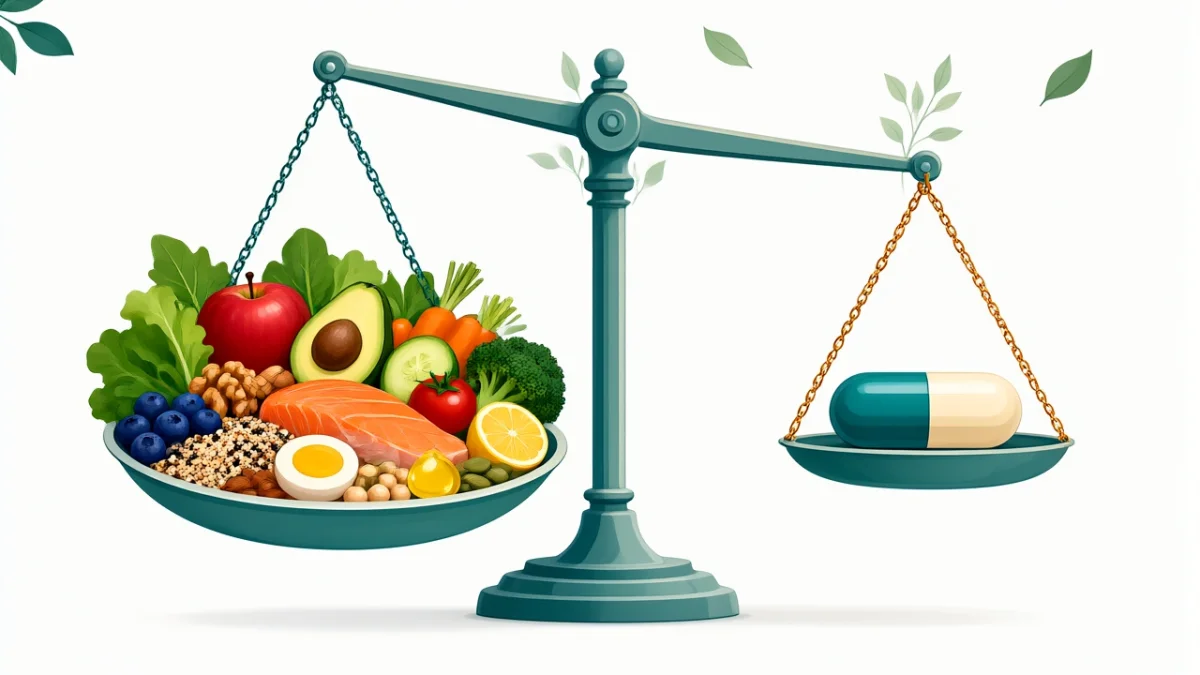
Key Facts About Weight Loss Supplements
Before you buy any bottle, look at how these products work and what rules govern them.
| Attribute:Attribute | What You Need to Know:What You Need to Know | Source:Source |
| Attribute:FDA Approval | What You Need to Know:Not required before sale; FDA only acts after safety complaints arise. | Source:U.S. FDA / DSHEA (1994) |
| Attribute:Main Mechanism | What You Need to Know:Most use stimulants to raise heart rate or fiber to swell in the stomach. | Source:NIH Office of Dietary Supplements (2022) |
| Attribute:Typical Weight Loss | What You Need to Know:Often 0 to 3 pounds more than a sugar pill over 8 to 12 weeks. | Source:International Journal of Obesity (2021) |
| Attribute:Tolerance Risk | What You Need to Know:High for stimulants like caffeine; calorie-burn effects fade with daily use. | Source:NIH ODS Health Professional Fact Sheet |
| Attribute:Label Transparency | What You Need to Know:Brands can hide exact ingredient doses inside proprietary blends. | Source:American Medical Association (2022) |
| Attribute:Safety Risks | What You Need to Know:Can cause rapid heart rate, high blood pressure, liver stress, or hidden drug exposure. | Source:U.S. FDA Public Notifications |
What Clinical Studies Say About Popular Ingredients
Not every ingredient has zero research, yet none act as a standalone fix. Here is how top ingredients hold up in human studies.
| Ingredient:Ingredient | Marketing Claim:Marketing Claim | Evidence Level:Evidence Level | What Studies Show & Source:What Studies Show & Source |
| Ingredient:Caffeine | Marketing Claim:Boosts metabolism and burns fat fast. | Evidence Level:Mixed / Modest | What Studies Show & Source:May cause slight short-term weight loss or less weight gain, but tolerance builds quickly (NIH ODS, 2022). |
| Ingredient:Green Tea Extract | Marketing Claim:Melts belly fat via plant catechins. | Evidence Level:Weak / Minimal | What Studies Show & Source:Human trials show very small weight drops (under 2 pounds on average); high doses can stress the liver (NIH ODS, 2022). |
| Ingredient:Garcinia Cambogia | Marketing Claim:Blocks fat production and curbs appetite. | Evidence Level:Weak / Not Proven | What Studies Show & Source:Randomized human trials show little to no difference compared to a placebo; rare liver injury cases reported (NIH ODS, 2022). |
| Ingredient:Glucomannan | Marketing Claim:Fills your stomach so you eat less. | Evidence Level:Mixed / Weak | What Studies Show & Source:A soluble fiber that may aid fullness, yet a 2021 International Journal of Obesity review found no strong proof for weight loss. |
| Ingredient:Chitosan | Marketing Claim:Traps dietary fat in your gut. | Evidence Level:Weak / Minimal | What Studies Show & Source:High-quality trials show clinically insignificant weight loss; causes gas and bloating (NIH ODS, 2022). |
| Ingredient:Bitter Orange | Marketing Claim:Safe herbal swap for banned ephedra. | Evidence Level:Weak + Safety Risk | What Studies Show & Source:Contains synephrine; small, poor-quality trials show weak weight loss while raising heart rate and blood pressure (NIH ODS, 2022). |
| Ingredient:Calcium & Vitamin D | Marketing Claim:Speeds up fat breakdown in cells. | Evidence Level:No Evidence | What Studies Show & Source:Large human clinical trials show no effect on weight loss or weight gain prevention (NIH ODS, 2022). |
Myths vs. Evidence
Marketing copy repeats the same promises every year. Here is how common myths compare to real data.
- Myth: "Natural" herbs are always gentle and safe.Evidence: Natural plants can carry strong risks. The FDA banned ephedra (ma huang) in 2004 after it caused heart attacks and strokes. Green tea extract in concentrated pills has also been linked to rare liver injury (NIH ODS, 2022).
- Myth: Sweat and jitters mean the pill is burning fat.Evidence: Feeling hot or wired only means stimulants are triggering your nervous system. You may lose temporary water weight, not stored body fat.
- Myth: If a store sells it, the government tested it.Evidence: Major retailers sell thousands of untested blends. The FDA has identified over 1,000 tainted weight loss and fitness products laced with hidden prescription drugs or banned stimulants.
A 6-Point Checklist to Spot Weak Weight Loss Pills
Use this quick checklist before you spend money on any weight loss bottle.
- [ ] Promises fast results: Claims like "lose 10 pounds in 10 days" are false. Safe fat loss is 1 to 2 pounds per week.
- [ ] Uses a proprietary blend: The label hides individual milligram doses behind one combined blend weight.
- [ ] Relies on high stimulants: Lists heavy caffeine, guarana, yerba mate, and bitter orange all together.
- [ ] Cites animal or cell studies only: Mentions "lab breakthroughs" without citing human randomized trials.
- [ ] Missing third-party testing: Has no seal from independent labs like USP, NSF International, or ConsumerLab.
- [ ] Mimics prescription drug names: Uses names that sound like medical GLP-1 drugs to confuse shoppers.
If you want to understand how long realistic, healthy fat loss actually takes without shortcuts, read our full guide on realistic weight loss timelines and expectations. You can also review our breakdown of common fat burner side effects before trying any stimulant product.
Who Should Be Careful
Certain people face higher risks from weight loss supplements and should skip them unless a doctor approves:
- People with heart issues or high blood pressure: Stimulants can trigger chest pain, rapid pulse, or dangerous blood pressure spikes.
- Anyone taking daily prescription drugs: Herbs and fibers can block drug absorption or cause harmful interactions with blood thinners, antidepressants, or diabetes medicines.
- People with liver or kidney conditions: Concentrated herbal extracts put extra strain on your liver and kidneys.
- Pregnant or breastfeeding women: Most weight loss ingredients have not been tested for safety during pregnancy or nursing.
What Actually Works Instead of Pills
If pills are not the answer, what moves the needle? Evidence-based habits target the real drivers of body weight:
- A modest calorie deficit: Cutting 300 to 500 calories a day through whole foods leads to steady fat loss without extreme hunger.
- Higher protein and food fiber: Eating lean protein, beans, vegetables, and oats boosts fullness hormones naturally.
- Strength training and daily steps: Lifting weights protects muscle tissue while you lose fat, keeping your resting metabolism steady.
- Consistent sleep: Getting 7 to 9 hours of sleep helps keep hunger hormones balanced.
- Medical weight management: If lifestyle steps are not enough, talk to a doctor about proven, FDA-approved treatments tailored to your health.
Questions to Ask Your Doctor or Pharmacist
Before starting any supplement or weight loss plan, bring these questions to your next visit:
- Could any ingredient in this bottle interact with my current medications?
- Is my blood pressure or heart health safe for caffeine or herbal stimulants?
- Could an underlying issue, like a thyroid problem or medication side effect, be slowing my weight loss?
- What safe, evidence-based weight loss options fit my health history?
[[IMAGE: Calm, photorealistic scene of an everyday adult talking with a friendly pharmacist across a clean pharmacy counter while looking at a notepad, warm natural lighting, 16:9 | alt: Person asking a pharmacist questions about weight loss supplements | caption: Checking with a pharmacist or doctor helps you avoid drug interactions and wasted money.]]
Key Takeaways
- Laws favor marketers: Under DSHEA (1994), companies do not have to prove weight loss pills work before selling them.
- Results are tiny: Human trials show most supplements add 0 to 3 pounds of weight loss over months, which is not enough for lasting health gains.
- Tolerance happens fast: Your body quickly adapts to caffeine and stimulants, erasing any small boost in calorie burn.
- Hidden risks exist: Proprietary blends hide doses, and some tainted pills contain unlisted prescription drugs.
- Habits beat pills: Steady nutrition, protein, movement, and medical guidance outperform over-the-counter fat burners every time.
Not sure what step to take next? Print or save the 6-point checklist above and discuss your goals with your doctor or pharmacist. For a deeper look at the clinical evidence behind popular diet pills, visit our main pillar guide on whether weight loss supplements really work.
Frequently Asked Questions
Why don't weight loss supplements work for most people?
Most weight loss pills do not fix the calorie balance or hunger hormones that control body fat. Clinical reviews from the NIH show that common ingredients either have no effect or burn too few calories to matter. Your body also adapts quickly to stimulants, stopping any small early boost.
Are any over-the-counter weight loss pills FDA-approved?
No over-the-counter dietary supplement is FDA-approved for weight loss. Under U.S. law, supplements are regulated as food, not drugs, so brands do not prove effectiveness before sales begin. Only specific prescription medications—and one low-dose over-the-counter drug, orlistat—have FDA approval for weight loss.
Why do some people lose weight at first on fat burners?
Early drops on the scale usually come from water loss or eating less due to mild nausea or caffeine jitters. Many weight loss teas and pills also contain natural diuretics or laxatives. Once you drink normal fluids or build caffeine tolerance, that water weight returns.
Can weight loss supplements work if I also diet and exercise?
Adding a supplement to diet and exercise rarely adds meaningful extra fat loss. In clinical trials where both groups follow a diet, people taking a supplement usually lose only 1 to 2 pounds more than those taking a sugar pill. Your diet and movement do almost all the real work.
Are weight loss supplements safe to take every day?
Daily use can carry side effects like insomnia, anxiety, fast heart rate, high blood pressure, and stomach upset. Some concentrated herbal extracts, such as high-dose green tea extract, have also been linked to liver stress. Always check with a doctor or pharmacist before daily use.
How can I tell if a weight loss supplement is a scam?
Watch out for promises of rapid fat loss without diet changes, "miracle" claims, or labels that hide doses inside proprietary blends. Legitimate products do not guarantee exact pound drops or mimic prescription drug names. Look for third-party testing seals like USP or NSF, and verify ingredients on the NIH website.
Medical Note: This article shares general health information and is not medical advice. If you have a health condition, take prescription or over-the-counter medicines, or are pregnant or breastfeeding, talk to your doctor or pharmacist before trying any supplement. Never stop taking a prescribed medication without medical guidance.