How Long Does It Take for Weight Loss Supplements to Show Results?
Quick answer: Most over-the-counter weight loss supplements take 8 to 12 weeks of consistent daily use alongside a calorie deficit to produce measurable—though modest—changes on the scale. While stimulant- or fiber-based formulas may trigger immediate short-term effects like boosted energy or reduced hunger within days, actual fat loss requires sustained metabolic shifts over two to three months. Even in clinical trials, average weight loss from supplements typically totals only 1 to 4 pounds (0.5 to 2 kg) more than diet and exercise alone.
Introduction Overview – How Long Does It Take for Weight Loss Supplements to Show ?
Disclaimer:This is an educational article with no product promotion or affiliate links. The content below is for informational purposes only and is not medical advice. Always consult a doctor or pharmacist before starting any dietary supplement, especially if you have an underlying health condition, take prescription medications, or are pregnant or breastfeeding.
Understanding Weight Loss Supplements and Realistic Timelines
A weight loss supplement is an over-the-counter dietary product—sold as capsules, powders, teas, or gummies—containing concentrated herbs, fibers, caffeine, vitamins, or minerals intended to support weight management. Unlike prescription obesity medications (such as GLP-1 receptor agonists), dietary supplements do not undergo pre-market approval from the U.S. Food and Drug Administration (FDA) to prove efficacy before reaching store shelves.
People frequently search for supplement timelines because marketing labels often imply rapid, effortless fat loss within days. In reality, biological fat loss works much like filling a savings account: a single deposit doesn’t make you rich, and a single capsule doesn’t melt stored adipose tissue. Supplements only act as minor accelerators—nudging appetite, digestion, or calorie burn by a few percentage points—while your daily calorie balance does the heavy lifting.
How I Researched This Guide
To give you an accurate, hype-free timeline, I reviewed clinical fact sheets and systematic evaluations from the National Institutes of Health (NIH) Office of Dietary Supplements, Mayo Clinic, Cochrane Database of Systematic Reviews, and peer-reviewed human randomized controlled trials (RCTs) indexed on PubMed (reviewed November 2026).
What You Will Learn
A realistic week-by-week timeline of what happens in your body from Day 1 to Week 12.
Why stimulants, fibers, and fat blockers work on completely different schedules.
What clinical trials actually show regarding average weight lost over 8 to 12 weeks.
How to tell the difference between water weight shifts and true fat loss.
Key safety red flags and questions to ask your doctor or pharmacist.
Week-by-Week Timeline: What to Expect
Because supplement ingredients interact with different biological systems, the timeline separates into distinct phases—moving from immediate physiological sensations to gradual body composition changes.
Week-by-Week Timeline: What to Expect – How Long Does It Take for Weight Loss Supplements to Show ?
Timeline Phase:Timeline Phase
What Happens Biologically:What Happens Biologically
What You Might Notice:What You Might Notice
Realistic Scale Change:Realistic Scale Change
Timeline Phase:Days 1–7 (Immediate)
What Happens Biologically:Central nervous system stimulation (from caffeine/synephrine) or physical stomach expansion (from soluble fiber).
What You Might Notice:Higher daytime alertness, slight jitteriness, fuller stomach after meals, or mild digestive gas/bloating.
Realistic Scale Change:0–2 lbs (mostly water weight or changes in bowel transit, not body fat).
Timeline Phase:Weeks 2–4 (Adjustment)
What Happens Biologically:Your body adapts to ingredient intake and a reduced-calorie diet; minor increases in resting energy expenditure or satiety.
What You Might Notice:More predictable appetite cues, fewer afternoon cravings, slightly better workout stamina.
Realistic Scale Change:1–3 lbs (primarily driven by your calorie deficit).
Timeline Phase:Weeks 5–8 (Early Momentum)
What Happens Biologically:Cumulative adherence to diet, movement, and modest metabolic/appetite support begins reflecting in adipose tissue reduction.
What You Might Notice:Clothes fitting slightly looser around the waist; subtle changes in body measurements.
Realistic Scale Change:2–5 lbs total (supplements typically account for ~0.5–1.5 lbs of this difference).
Timeline Phase:Weeks 8–12 (Evaluation Window)
What Happens Biologically:Clinical trial endpoint for most over-the-counter ingredients; metabolic adaptation may slow initial progress.
What You Might Notice:Clear pattern of whether the supplement adds value or if progress has plateaued.
Realistic Scale Change:3–8 lbs total (average clinical difference over placebo is ~1–4 lbs).
Why Different Ingredients Work on Different Schedules
Not every supplement targets the same pathway. Understanding the mechanism of action (how an ingredient interacts with your body) explains why some effects feel instant while actual fat loss takes months.
1. Appetite Suppressants and Viscous Fibers (Days to 2 Weeks)
Ingredients like glucomannan (konjac root), psyllium husk, and beta-glucans absorb water in your digestive tract, forming a thick gel that slows gastric emptying (the speed at which food leaves your stomach).
Timeline: You feel fuller during and immediately after meals from Day 1. However, feeling full only translates into fat loss if you consistently eat smaller portions over 4 to 12 weeks.
2. Thermogenics and Stimulants (Immediate Energy, 6–8 Weeks for Fat Loss)
Thermogenesis is the process by which your body burns calories to produce heat. Compounds like caffeine and green tea extract (rich in catechins like EGCG) temporarily stimulate the sympathetic nervous system and increase lipolysis (the breakdown of stored fats into free fatty acids).
Timeline: Alertness and heart rate rise within 30 to 60 minutes of taking a dose. Yet boosting daily calorie burn by 50 to 100 calories takes 6 to 8 weeks to yield even one pound of actual fat loss—and your body often builds tolerance to caffeine's metabolic bump within a few weeks.
3. Carbohydrate and Fat Blockers (Meal-by-Meal Action, 8–12 Weeks for Results)
Ingredients such as white kidney bean extract (Phaseolus vulgaris, an alpha-amylase inhibitor that slows starch digestion) or chitosan (a shellfish-derived fiber claimed to bind dietary fats) act directly inside the digestive tract during meals.
Timeline: Enzyme inhibition happens immediately during digestion, often causing noticeable gastrointestinal side effects within days. Measurable differences in body weight in clinical trials generally require 8 to 12 weeks of consistent pre-meal dosing.
What Clinical Research Actually Shows (Evidence vs. Claims)
When evaluating how long supplements take to work, clinical trials reveal two critical truths: the timeline is measured in months, and the total effect size is small.
What Clinical Research Actually Shows (Evidence vs. Claims) - How Long Does It Take for Weight Loss Supplements to Show ?
According to the NIH Office of Dietary Supplements (2022) and Mayo Clinic (2024), very few over-the-counter ingredients have strong evidence for long-term weight loss. Almost every study showing positive results combined the supplement with a hypocaloric diet (reduced-calorie eating plan) and regular exercise.
Clinical Timeline & Findings:8 weeks: In a randomized trial of 70 adults with obesity (45 completers), the supplement group lost 4.2 lbs vs. 0.9 lbs on placebo alongside diet/exercise.
Evidence Rating:Weak / Limited (small sample, short duration)
Primary Source:Mayo Clinic (2024)
Ingredient / Category:Glucomannan / Soluble Fiber
Marketing Claim:"Blocks hunger for rapid weight loss"
Clinical Timeline & Findings:4–12 weeks: Increases fullness quickly, but systematic reviews show minimal or inconsistent weight differences vs. placebo.
Evidence Rating:Mixed / Weak
Primary Source:NIH ODS (2022)
Ingredient / Category:Chitosan
Marketing Claim:"Traps dietary fat before absorption"
Clinical Timeline & Findings:4–24 weeks: A Cochrane review of 15 trials (1,219 adults) found an average difference of ~1.7 kg, shrinking to clinically insignificant levels in high-quality trials.
Marketing Claim:"Turns body fat directly into energy"
Clinical Timeline & Findings:8–52 weeks: Meta-analyses of secondary outcomes show a modest ~1.33 kg average weight difference compared to placebo.
Evidence Rating:Mixed / Modest
Primary Source:NIH ODS (2022)
Honest Take: If a supplement hasn't helped you lose even 2% to 3% of your starting body weight after 12 weeks of consistent use alongside reasonable eating habits, it is unlikely to work for you at month six. Continuing past that point usually drains your wallet rather than your fat stores.
5 Factors That Speed Up or Slow Down Your Results
Two people taking the exact same supplement on the exact same day will rarely see identical timelines. Five variables dictate your pace:
Your Calorie Deficit: No over-the-counter supplement overrides a calorie surplus. If you consume more calories than you burn, a thermogenic or fiber supplement will not produce weight loss.
Baseline Diet and Protein Intake: High-protein, fiber-rich whole foods naturally regulate hunger hormones like ghrelin and leptin. Supplements work best when layered onto structured meals rather than erratic eating.
Stimulant Tolerance: If you already drink two or three cups of coffee daily, your adenosine receptors are already adapted to caffeine. A caffeine-based fat burner will likely produce minimal metabolic or appetite change.
Bioavailability and Dosing: Many commercial supplements use proprietary blends that hide exact ingredient amounts behind a single total weight. If an ingredient is underdosed compared to clinical trials, you will wait indefinitely for results that cannot occur.
Sleep and Stress Levels: Chronic sleep deprivation (under 6–7 hours) raises cortisol and disrupts insulin sensitivity, easily erasing the tiny 50-calorie daily boost a supplement might provide.
Myths vs. Evidence: Common Timeline Misconceptions
Myth: Losing 5 pounds in the first week proves a fat burner is working.
Evidence: Human body fat stores roughly 3,500 calories per pound. Losing 5 pounds of pure fat in seven days would require an extreme 2,500-calorie daily deficit. Rapid Week 1 drops come from water weight, reduced glycogen stores, or laxative/diuretic herbs (like senna or dandelion) often hidden in "detox" formulas.
Myth: Doubling the dose makes supplements work twice as fast.
Evidence: Exceeding label doses does not accelerate fat oxidation; it sharply increases risks of heart palpitations, high blood pressure, severe diarrhea, and liver stress.
Myth: "Natural" herbal supplements are gentle and safe to take indefinitely.
Evidence: Both the NIH and Mayo Clinic warn that concentrated herbal extracts—particularly high-dose green tea extract, bitter orange (Citrus aurantium), and usnic acid—have been linked to acute liver injury and cardiovascular events.
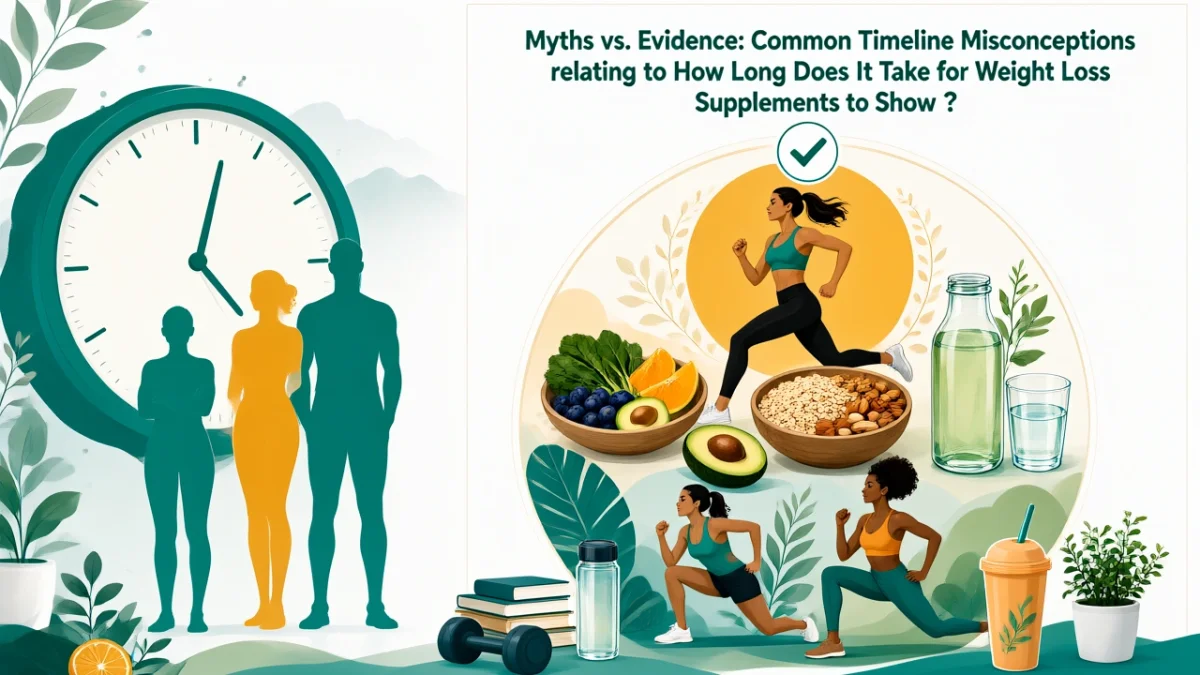
Myths vs. Evidence: Common Timeline Misconceptions - How Long Does It Take for Weight Loss Supplements to Show ?
Practical Checklist: How to Track a Fair 8-to-12-Week Trial
If your doctor clears you to try a supplement, use this checklist to evaluate whether it actually works without guessing:
[ ] Establish a 2-week baseline first: Track your normal weight and eating habits for 14 days before starting the supplement so you know what your diet alone accomplishes.
[ ] Verify transparent dosing: Confirm the label lists exact milligram amounts for every active ingredient—avoiding opaque "proprietary blends."
[ ] Check third-party testing seals: Look for USP, NSF International, or ConsumerLab verification to reduce the risk of undeclared stimulants or contaminants.
[ ] Track weekly averages, not daily weigh-ins: Weigh yourself under the same conditions (morning, after using the bathroom) 3–4 times a week and compare weekly averages to filter out normal water fluctuations.
[ ] Measure waist circumference every 4 weeks: Use a flexible tape measure at navel level; subtle fat loss often shows in inches before the scale moves dramatically.
[ ] Set a hard 12-week stop date: Evaluate your total progress at Week 12. If results are negligible or side effects persist, discontinue use.
Who Should Be Careful & When to See a Doctor
Certain groups face higher risks from weight loss supplements and should avoid them unless specifically supervised by a physician:
Who Should Be Careful & When to See a Doctor - How Long Does It Take for Weight Loss Supplements to Show ?
People with cardiovascular conditions: High blood pressure, arrhythmias, or heart disease can worsen with stimulant ingredients like caffeine, synephrine (bitter orange), or yohimbine.
Individuals with liver or kidney disease: Concentrated botanical extracts are processed through the liver and kidneys, increasing toxicity risks.
Anyone taking prescription medications: Soluble fibers can block the absorption of oral medications (such as thyroid hormones or diabetes drugs) if taken within two hours, while herbal extracts can alter liver enzymes that metabolize blood thinners and antidepressants.
Pregnant or breastfeeding individuals, and adolescents: Safety data is lacking, and calorie restriction or stimulants can interfere with healthy growth and fetal development.
Stop taking the supplement and seek prompt medical attention if you experience chest pain, a racing or irregular heartbeat, severe abdominal pain, yellowing of the skin or eyes (jaundice), dark urine, or persistent nausea.
Questions to Ask Your Doctor or Pharmacist
"Do any of the active ingredients on this label interact with my current prescriptions or over-the-counter medications?"
"Given my blood pressure, liver health, and medical history, are stimulants or concentrated herbal extracts safe for me?"
"What specific health markers—such as waist circumference, blood sugar, or blood pressure—should I track over the next 8 to 12 weeks?"
"If over-the-counter options aren't appropriate, would evidence-based medical nutrition therapy or prescription weight management be safer and more effective?"
Summary: Key Takeaways
Realistic Timeline: Expect 8 to 12 weeks of daily use alongside a calorie deficit to see measurable fat loss; immediate effects in Week 1 are typically limited to energy shifts, fullness, or water weight.
Modest Magnitude: Clinical trials show that even well-studied ingredients (like caffeine, green tea extract, or soluble fibers) add only 1 to 4 pounds of average weight loss over two to three months compared to placebo.
Mechanism Matters: Fiber supplements curb appetite immediately at mealtime, whereas thermogenics require weeks of cumulative calorie burn to change body composition.
The 12-Week Rule: Use a structured 12-week trial with weekly weight averages and waist measurements; if you see no meaningful benefit by Week 12, stop taking the product.
Next Steps
Before spending money on a new bottle, take the ingredient label—and the four questions above—to your pharmacist or primary care doctor for a quick interaction check. If you decide to test a supplement afterward, pair it with a sustainable 300-to-500-calorie daily food deficit and track your progress at Weeks 4, 8, and 12.
Frequently Asked Questions (FAQ)
How long do weight loss pills take to start working?Most over-the-counter weight loss pills take 8 to 12 weeks to produce noticeable, measurable fat loss. While stimulant or fiber ingredients may affect energy levels or appetite within the first few days, actual changes in body fat accumulate gradually over two to three months.
Frequently Asked Questions (FAQ) - How Long Does It Take for Weight Loss Supplements to Show ?
Why haven't I lost weight after 2 weeks on a fat burner?
Two weeks is too short a window to evaluate true fat loss from a dietary supplement. Early weight fluctuations are easily masked by normal water retention, menstrual cycle shifts, or dietary sodium, and clinical trials typically require at least 8 weeks to detect modest differences over a placebo.
Can weight loss supplements work without diet and exercise?
No; clinical evidence consistently shows that over-the-counter supplements do not produce meaningful weight loss without a calorie deficit. In human trials where participants lost weight, both the supplement and placebo groups followed reduced-calorie diets and regular exercise routines.
How much weight can you realistically lose in a month with supplements?
Healthy, sustainable weight loss averages 1 to 2 pounds per week (4 to 8 pounds per month) through diet and physical activity. A supplement typically contributes only a tiny fraction of that total—roughly 0.5 to 1.5 pounds per month in clinical studies.
What are the first signs a weight loss supplement is working?
Early signs appear in Weeks 1 to 3 as behavioral and energy shifts rather than dramatic scale drops. Look for feeling full sooner during meals, fewer afternoon snack cravings, steadier workout energy, and gradual decreases in waist measurements.
When should I stop taking a weight loss supplement?
Stop immediately if you experience side effects like racing heart rate, chest pain, severe digestive distress, or signs of liver stress (such as dark urine or yellowing eyes). Otherwise, use 12 weeks as your cutoff: if you have seen no measurable progress in weight or waist circumference after three months of consistent use, discontinue the product.
Last reviewed: November 21, 2026. If you spot something out of date or wrong, tell me and I'll fix it.
Educational Disclosure: This is an educational article. It has no affiliate links and does not sell or promote any product. Medical Note: This guide gives general health facts, not medical advice. Talk to your doctor or pharmacist before you try any supplement. This matters most if you have a health issue, take daily drugs, are…
(Medical & Editorial Note: This guide is for educational purposes only and is not medical advice. We do not promote or sell any supplements here. If you have a health condition, take prescription or over-the-counter medications, or are pregnant or breastfeeding, talk with a doctor or pharmacist before starting any supplement—and never stop a prescribed…
You buy a bottle that promises fast fat loss. You take the pills every day. Weeks pass, and the scale barely moves. If you have wondered why weight loss supplements don’t work, you are not alone. Most weight loss supplements fail because they do not fix how your body stores fat. Under U.S. law, brands…
Educational Disclosure & Medical Note: This is an educational article with no product promotion or affiliate links. The content below is for informational purposes only and is not medical advice. If you have an existing medical condition, take prescription or over-the-counter medications, or are pregnant or breastfeeding, talk to a doctor or pharmacist before starting…
Educational & Medical Disclosure: This is an educational guide with no product promotion or affiliate links. The information below is for general educational purposes and is not medical advice. Always speak with a doctor or pharmacist before starting any supplement—especially if you have a medical condition, take prescription medications, or are pregnant or breastfeeding. Never…